

BioBanking
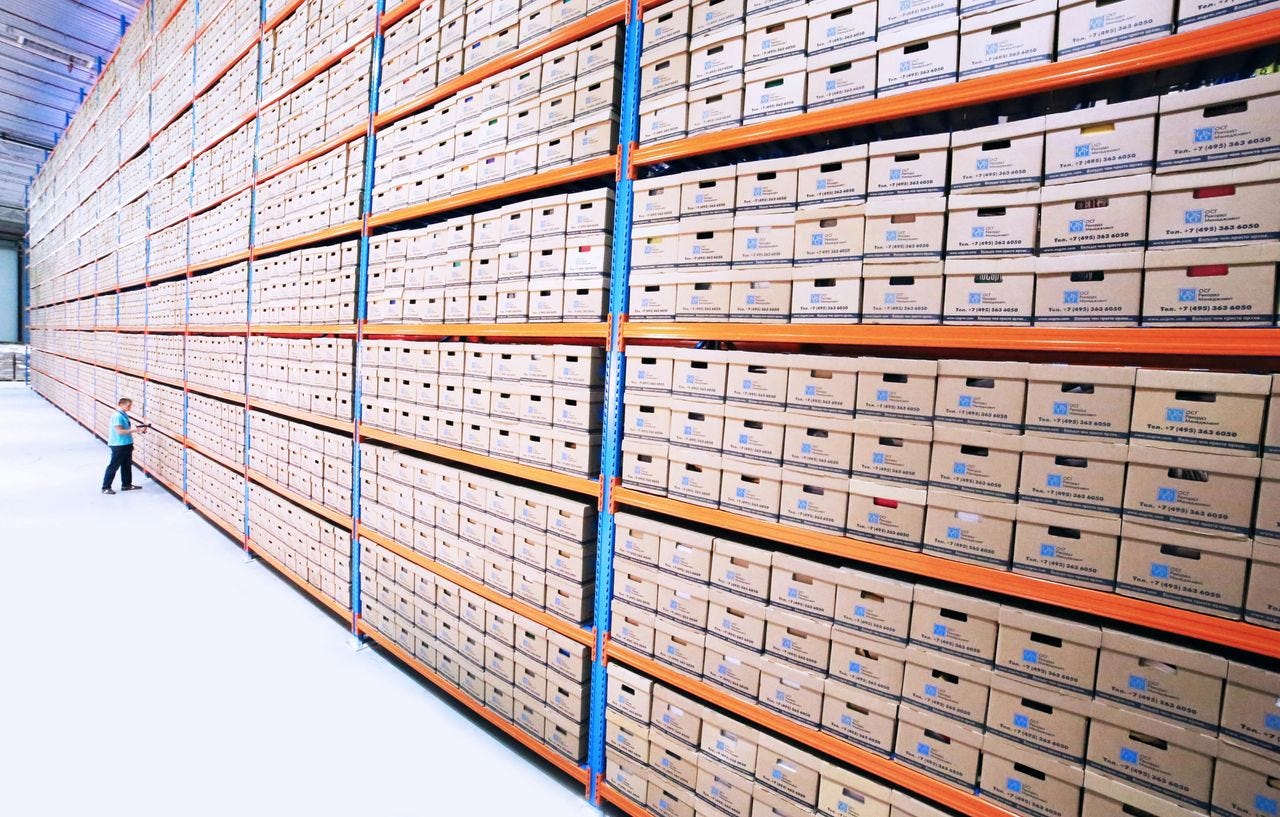
Biobanking is the idea of preserving (usually by freezing) tissue samples (ideally embryos) from species at risk of extinction. The hope is that at some point, almost certainly within the next 200 years, we will be able to use these samples to re-create the organism and effectively “de-extinct” a species.
Why aren’t we Biobanking?
We aren’t doing it en-masse right now for several reasons. Primarily because it’s a new technology. St. Judes in 1976 was perhaps the first frozen biobank. We weren’t able to even read DNA 60 years ago, let alone edit it until 12 years ago, we didn’t anticipate the usefulness of intact tissue samples until recently.
Although de-extinction is beyond our scientific capabilities today, we naturally expect that biotechnology will improve in the future, perhaps eventually making this a viable, scalable conservation strategy. Other environmental-conservation groups, perhaps because of a tendency to see technology in a negative light, underrate this avenue.
Given that it seems inevitable that many species will go extinct over the next decades/centuries, dismissing de-extinction approaches for essentially public-relations reasons (the belief that talking loudly about de-extinction will lessen public support for other kinds of conservation) seems ill-advised.1
Consequently, only a few places are biobanking genetic material from wild species, and perhaps only Revive and Restore is doing so with the explicit objective of aiding hypothetical future de-extinction projects as we’ve outlined here. In that sense, this work is extremely neglected.
Cost
On top of that, the cost is minimal. Something like $2000 for 100 years for one sample.
Some example biobank costs:
$200 for freezing one sample, pluripotent cells.
$1 per vial per year storage
$1-5 per year storage
Collection and other one time costs would add more to the total.
$15,000 for a biological collection expedition is reasonable. The collectors might gather 30 per expedition or $500 per sample. Scaling up and targeting easily collected species could greatly decrease cost per sample. But let’s estimate $1500 in one time costs for travel, record keeping, operations, equipment, sample preparation etc and $500 for 100 years storage again due to storage, operations, record keeping. $2000 for one sample seems like a reasonable estimate.
Multiple Samples
We will want to do many more than one sample per species. To properly de-extinct a species you will need a thriving population of diverse individuals. The specific number varies2 but the common rough estimate is 500 breeding individuals. And then we will want some redundancy, so maybe three times that, so there are samples all over the world and we can lose 30% of them to unforeseen disasters and slow degradation. We would target something like 1500 samples for each species we are preserving. That is about $3,000,000 for 100 years per species, and we can save them, effectively forever. For comparison, one study estimates it costs about $1,300,000 per year to keep critically endangered species surviving in the wild with insurance populations in zoos (which the authors consider a low cost).
But there are other problems and concerns that should be mentioned.
Sample Degradation
How much samples degrade over time is unknown because biobanks have only existed for less than 50 years. If samples degrade too far before they are used for de-extinction, they may not save a species from being lost. So far we know they can be viable for 50 years. (27 years in humans) We see indications that embryo vitrification is basically indefinite in storage length and thawing is successful 80-95% of the time.
Perhaps de-extinction can only be achieved with embryos. That would raise the cost and difficulty of acquiring the tissue samples significantly, maybe as much as 100x as much.
Required De-Extinction Technology
It is possible that we cannot bring species back without a functional womb. Perhaps surrogate wombs from related species can work. The major obstacles are: rejection of a foreign body, gestation time mismatch, and uterine and placental differences. These seem difficult to achieve, especially if we’ve lost the ability to study what the embryos need. Artificial wombs may be required. But these do not seem like they are impossible obstacles. Given that we couldn’t read DNA 60 years ago, merely another 60 years might be enough. Foreign body rejection can be suppressed with current immunosuppressents in humans. Gestation time and uterine/placental differences seem eventually solvable. We have just begun to apply modern breakthroughs to biotechnology and AI is likely to continue to accelerate our expansion of capabilities. It seems highly likely that it will be achieved at some point within the next 200 years.
Parental Upbringing
Perhaps the species needs an upbringing, or certain initial conditions to survive.
Upbringing is a concern for social animals which receive some kind of care from their parents (altricial). It may be very difficult to replicate many aspects of rearing, such as the transference of the gut microbiome and the teaching of social cues. Some amount of parental care is nearly 100% in mammals and birds, but rare in most species overall.
“Only ~30% of fish families, 6–15% of anurans (frogs and toads), and ~20% of salamander species exhibit parental care (Balshine, 2012). Care in reptiles is also extremely rare; only ~3% of 938 squamate reptile genera exhibit care” (Maciejewski et al. 2022)
It is important to document upbringing in endangered altricial species and try to recreate it when performing de-extinction, but fortunately it will not pose an obstacle for the majority of species (Insect parental care is understudied, but appears to be similar to the above percentages).
Re-introduction to the Wild
Perhaps their habitat is lost and cannot be re-created.
It is important to preserve habitats for re-introduction. Practicing de-extinction is one of the ways habitat can be re-created. The hope is that we could de-extinct species one at a time, rebuilding until the habitats are sufficiently advanced to support the other species’ de-extinction. Fortunately plants tend to survive mass extinctions, are relatively easy to keep surviving populations, easy to preserve, and easy to de-extinct relative to other species.
There are several cases of totally dependent ecological relationships. Obligate mutualism such as all lichen species (20,000), corals (800, most parasites (200,000), and ant-plant (250) relationships. Pollinators are mostly generalists. Perhaps 4,000 species amongst the orchid specialists, fig wasps, specialized bees, birds, and fly pollinators. In total this represents ~300,000 known obligate species (0.003%) that it may not be possible to practice de-extinction. We should take special care to help these species survive.
Current state of de-extinction technology:
We are able to clone a deceased individual from a 33 year old biobanked sample. (Black footed ferret)
We are able to implant an embryo into closely related species and bring it to term. (Guar and Bongo)
Colossal Biosciences is able to insert bits of extinct species DNA to create hybrid individuals. (Dire wolves)
Immunosuppressants increase birthrates from embryo transfers (Several)
We are able to trigger stem cell/pluripotent cell generation (2006)
We are learning how to recreate lost habitat (Tallgrass Prairie Preserve, Pleistocene Park)
We can teach species some of their lost survival skills (Whooping crane, Condor, Orangutan )
Protein folding has been solved (AlphaFold2) and AI holds promise for unlocking other biomedical abilities
There are some large uncertainties, which is one reason why this is not our top recommendation for biodiversity preservation.
Remaining bottlenecks:
The importance of embryos vs tissue samples
Working immunosuppressents, implanting embryos, and pluripotent cell generation across diverse species types
Successful birth from distantly related wombs or artificial wombs
Teaching altricial species all their lost survival skills
Recreating lost habitat
Successfully re-introducing extinct species to the wild
Other unknown problems
Even if We Fail
Even if we never fully de-extinct any species we will have preserved the evolutionary history, cell structure, and biochemistry of these species. Their information can help inform the development of biotechnology, the study of our evolutionary history, genetic rescue, the creation of artificial biodiversity, or ecological monitoring. Conversely, if these species never go extinct the samples will still be useful for genetic diversity.
An Opportunity for Extinct Species
There is the possibility of biobanking species that are already extinct. Namely the specimens thawing out of the permafrost right now. There are very few people collecting these samples3 on shoestring budgets, as thousands more priceless specimens rot away every year. The researchers in Siberia and Canada are mostly collecting large mammals like mammoths, wolves, and sabertooths. Small mammals, insects, plants, and reptiles are rarely collected despite the importance of these extinct species. This is an ongoing tragedy where a very small targeted investment could make a massive difference for our long-term future.
Final Notes:
The possibility of solving extinction entirely makes this a crucial path to pursue. There are few biodiversity biobanks currently. It is not being pursued by traditional conservation. The cost is unbeatably low. The main remaining uncertainty is the possibility of providing adequate gestation.
The obvious compromise here seems to be “Do the genetic archiving, but then don’t talk loudly about it!” This would mirror the approach taken by organizations like ALLFED, who are researching ways to mitigate the harms of a potential nuclear winter, but don’t seek to widely publicise their ideas because they want to minimize the moral hazard of encouraging people to think that nuclear winter doesn’t sound so bad.
Based upon the healthiness of the genetic pool, generation times, how controlled breeding is, brood size, stochastic factors, how long your timelines are, and how risky you want to be. 500 individuals is for 90% chance of surviving 100 years. Another study suggests short study timelines is underestimating minimum viable population size, and 6000 individuals is necessary for 99% chance of surviving 100 years or 40 generations.
North-Eastern Federal University (NEFU) in Yakutsk, Russia, Institute of Applied Ecology of the North, Russian Academy of Sciences, University of Alaska Fairbanks, Yukon Government Palaeontology Program, German Research Centre for Geosciences (GFZ), University of Alberta, Canada, Stockholm University, Sweden, Alfred Wegener Institute, Germany, United States Geological Survey (USGS), Tomsk State University, Russia, University of Copenhagen, Denmark.