

Improving Crops
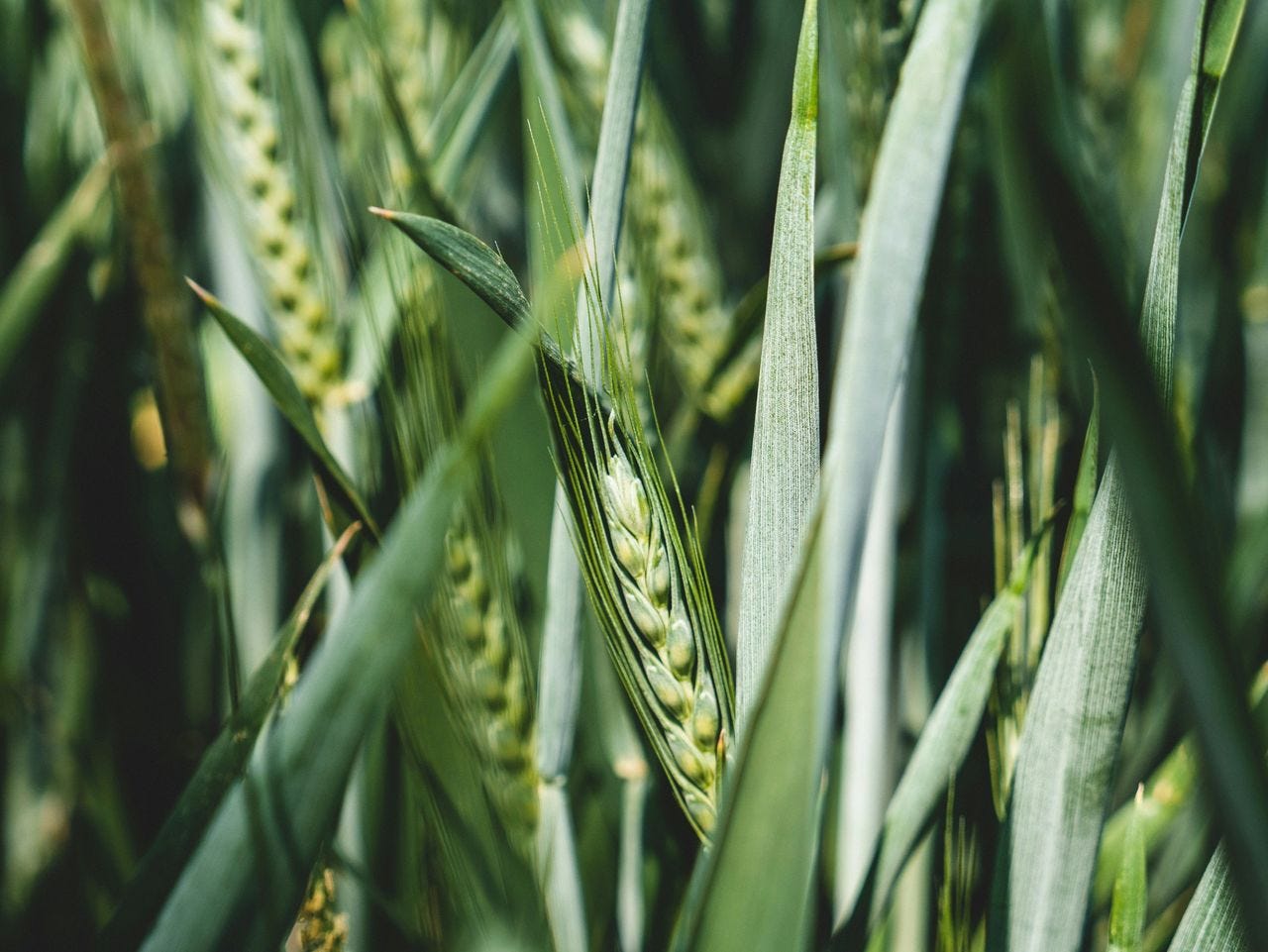
One of the biggest drivers of biodiversity loss is habitat conversion to agriculture. This is especially happening where livestock is profitable and human populations are growing. So one intervention might be making agriculture more efficient to reduce land use. Perhaps by genetically engineering food crops for better yield, improved use of fertilizers, laws encouraging larger more efficient operations, more tractors, or other ways of improving land efficiency.
(This is going to be a deliberation ladder, aka a twisty ride, so get ready!)
Better crops will help biodiversity:
We can anticipate much more forest clearing in Africa, where population growth is projected to expand most. As detailed in the book Not the End of the World, Africa has a lot of unrealized potential crop improvements that could mean greater production of food using less area. The idea is this would benefit wildlife by reducing habitat conversion to crops.
But wait, better crops will actually harm biodiversity!
But making crops more profitable runs the risk of increasing land conversion, via Jevon’s Paradox. Any time production becomes cheaper, supply and demand dictates that more land will be converted as it becomes more profitable to produce food. Even in poor, food-insecure societies, farmers are not so completely disconnected from markets that growing more food would be a profitless activity. Even remote jungle farmers trade extra produce. When crop productivity rises, agricultural pressure on natural habitat will rise. Therefore, improving crop productivity is not a good way to benefit biodiversity – although to be clear, it is still a benefit to human civilization.
But wait, better crops CAN help biodiversity (with regulations)?
There are cases where increases in agricultural output occurred alongside decreases in land conversion. This has happened when strong government regulation prevented additional land use (or converted land back to nature). It is a very unpopular position for governments to take, but it does happen:
Costa Rica: Intensifying cattle ranching and crops on existing lands combined with payments for ecosystem services allowed significant reforestation.
Vietnam: Increasing rice yields on existing paddies reduced pressure on upland forests when combined with strong forest protection laws. As a side note, Vietnam is now facing ecological troubles as a result of their water management for rice yields.
India: The Green Revolution (improvements in wheat/rice yields) decreased expansion into forested areas. Several forests were legally protected. Without these constraints, crop productivity gains would have been a force for accelerated expansion.
Malawi: This research found a decrease in deforestation as a result of increased agricultural productivity without external government pressure.
But even without regulations, better crops will help global biodiversity even as they harm locally??
Linus Lomqvist of The Breakthrough Institute argues: Once you take into account the global context, improved crops do decrease land use. This is because human civilization gets diminishing marginal utility from growing more food, so global food demand is relatively “inelastic” in economic terms.1 If you grow more food in one place, prices will decline and other places will grow less. Therefore, local productivity improvements increase local agricultural land conversion, but decrease land conversion globally.
But wait, this effect will actually backfire in Africa, harming biodiversity???
Unfortunately, in Africa, we will likely see increased global deforestation.2 Today, Africa is a very small portion of the global agricultural market; it also has extremely poor agricultural productivity. Increasing agricultural productivity there would greatly increase Africa’s market share - their (improved) yields remain well below the global average. So, improved African agricultural productivity would ironically cause global average agricultural productivity to drop precipitously, ultimately increasing global cropland.
But wait, better crops will ultimately help biodiversity even in Africa’s case:
Eventually,3 African agricultural productivity will rise to exceed today’s global average. The paper projects that African crop improvements will increase global land use for around 20 years before finally turning a corner and creating a net global decrease in loss of natural land.
Whew, that was a wild ride!
So, what conclusions can we take from all this?
For human flourishing, agricultural productivity improvements (especially in the world’s poorest countries) are always great. But for biodiversity purposes, it seems important to stay mindful of how local improvements will impact global average agricultural productivity.
Compared to helping African farming become just barely productive enough to become competitive on the global market (which would trigger a significant wave of habitat destruction), it seems important to aim to continue to improve productivity so they start being a positive influence on net global natural land (ending and then reversing the wave of habitat destruction) as quickly as possible.4
Similarly, one could seek to improve productivity in the nations that are already the most advanced:
The Breakthrough Institute also found that boosting US crop technology by doubling R&D funding would spare land at an area:area rate of 1:10 (1.8 million more acres used in the United States would spare a whopping 18 million acres around the globe). Because it would be so much more efficient than agriculture everywhere else.
Therefore funding the biggest successes to further improve might be a good idea. The actual situation on the ground is not straightforward though. A lot of US production is, for example, ethanol biofuel.
Introducing agricultural techniques is already a top priority around the world. It is a major focus of the Gates Fund, World Bank, etc. However, those programs are likely prioritizing crop improvements where there is the greatest human need, rather than where there is the greatest biodiversity threat. So there is potential for the deployment locations of crop improvements from a biodiversity perspective, despite the strong charitable emphasis.
Unfortunately, even with crop improvements, I am not sure that reducing agricultural land use is guaranteed. It’s possible people’s diets may change to prefer more meat. With animal meat, a much greater land area is required for production of each calorie. If instead the world ate less meat per person, it would greatly alleviate the habitat loss problems threatening biodiversity. (See the section on precision fermentation!)
Finally, here are some further considerations on this topic, which add yet more twists!
Global land use might not tell the whole story
We’ve actually already hit peak overall agricultural land, thanks to declining pasture land.
The land conversion threat to biodiversity is now decreasing globally, sorta. Decreases in world population growth, and increase in agricultural productivity have resulted in “peak agricultural land.” The productivity of pastureland (from improved breeds and grazing management) has outpaced the demand for livestock products. However this is pastureland, not cropland. Pastureland is in regions that are less productive, drier, and less biodiverse than cropland.5 Cropland on the other hand continues to expand, particularly in the tropics. So even though total agricultural area is now decreasing, habitat loss from agricultural land may still be worsening. This gets into land sharing versus land sparing, which is complicated.
Even if total land is decreasing, it may still be depleting soils, requiring fertilizer inputs, and moving to new locations. Therefore an unchanging total area of operational agricultural land may still threaten biodiversity. (see soil and pesticide shallow investigations!)
The question remains, where will land be spared as a result of crop improvements and local crop expansion? It stands to reason that it would be the least efficient crop land - which as far as I can tell are in desert, tundra, rocky, steep, and other marginally productive landscapes. These areas are unlikely to be high in biodiverse areas as they are not productive for biomass. On the plus side, they may be locations which support rare species, and are more likely to be adjacent to wilderness.
This seems like a good intervention with potential.
Humanity’s demand for food isn’t perfectly inelastic (even relative to population growth) for many reasons. People can simply eat more food, or they can eat food in less-efficient ways. Chief among these is by eating meat, which requires much more land for feedstock than it would take to grow plants to be eaten directly.
This paper does make some unrealistic simplifying assumptions (like modeling instant perfect trade between nations), so don’t take its conclusions as gospel. But I think it points to some important dynamics of the situation.
Unless the overall project of human civilization fails, scientific and technological progress grinds to a halt, and humanity struggles eternally with poverty, disease, deprivation, etc.
Maybe there is some perfect strategic play to improve agricultural techniques more in land adjacent to the most biodiverse locations with the intent to provide food and decrease the worth of deforestation. But this would be very nuanced to pull off. For example those farming techniques might spread into the forest rather than away. And everything is on a gradient of more or less biodiverse than the next area, so it would have to be a very coordinated effort. There are no simple recipes for success I could hope to suggest. But it’s an interesting thought.
Grazing is also less of a complete conversion than intensive cropland. There are some grazing techniques that increase biodiversity and mimic lost migration grazing pressure which can benefit rare specially adapted species. I’m not sure how much to trust the quality of the biodiversity from “regenerative grazing.” There is motivated reasoning at work. But the concept itself seems ecologically sound to me.