

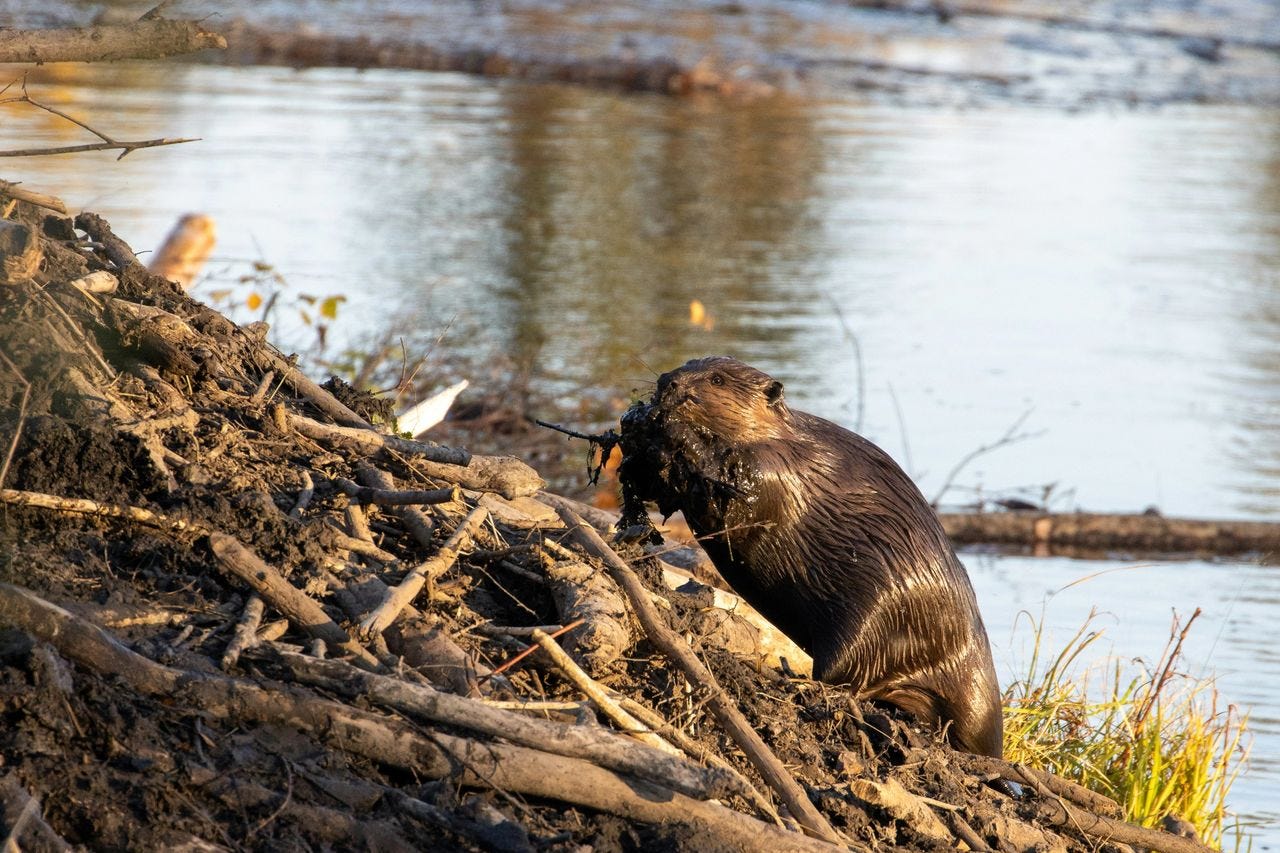
Ecological Engineer species can be a huge leverage point, where just a few animals can transform a landscape into a more bountiful, unique habitat. Some of the best cases are:
beavers (and others that create unique aquatic terrain)
oysters (and others that filter water)
prairie dogs (and others that create burrows for other species to use)
buffalo (and others that convert habitat through periodic grazing)
mountain lion (and others that change herbivory patterns).
The reason ecological engineers are so powerful is that they create many microhabitats or shifting patterns of use. This results in unique combinations that support specialized species. One of the most impactful roles of keystone species is building persistent physical structures that other species obligately depend on, such as coral reefs. Dozens of species depend on and could not exist without these structures. For example: burrowing owls don’t actually dig their own burrows! Rather, they repurpose prairie dog warrens.
Ecological engineers often create disturbance regimes of particular frequency, intensity, and scale. Ideally we want engineers that push the landscape toward intermediate disturbance at multiple nested scales. Not too connected, not too fragmented. Not too stable, not too chaotic. It’s context-dependent, which is why ecosystem management is so difficult.
Creating aquatic-terrestrial interfaces (channels, dams, wallows etc) generally tends to boost biodiversity, because the water-land edge is inherently rich and many species require both habitat types in their life cycle. Beavers are the most famous example, but many other species have related effects. However, many of them are not good targets for additional conservation funding due to either being deadly (hippopotamuses, crocodiles), high profile (elephants, atlantic salmon, coral), or already thriving (american alligators, wild boar, nutria). Here are some species that may be good targets for conservation as important and disappearing ecological engineers:
West African Manatee: Deepens river systems by digging out river bottoms and narrow channels, creating habitat for fish and passage for fishermen. They impose a lot of grazing pressure (including on invasive water hyacinth).
Prairie Crayfish: Their unfortunate fate of being a crustacean means they do not get conservation funding despite their importance for nutrient circulation in wetlands, creating microhabitats, increasing water retention in soil, and creating burrows for other species. They are located in the United States so they may not be neglected.
Lechwe: Semi-aquatic antelope that follow the flood cycles in massive herds.
Mussels (many species): renowned as important ecosystem engineers via their filtration effects. But as an uncharismatic animal they are understudied and underfunded, especially in Asia and Africa.
West African Manatees also need improved water quality, protection from hunting, and assured access between freshwater and ocean habitats. Here is an action plan for their threats and an organization working to combat hunting which is their greatest threat across their range.
Mussels typically decline from pollution and sediment. Buffer zone regulations 20-100 meters for erosion control and pollution runoff are the typical prescriptions for water quality. Mussels can be re-introduced from areas they were driven out of.
Other keystone species will have unique conservation plans for their particular situation and needs.
Another key example are disturbance-dependent communities. Large grazers in grasslands, elephants in savannas, etc, cause disturbances like heavy grazing and migration trampling. Without these periodic disturbances, many ecosystems converge on one kind of forest or shrubland rather than a mosaic of different ages and types. We already covered the potential for this in the “Fencing Improvements and Passage for Wildlife” last month. There are several places for re-establishment of large grazers -- areas that are expansive enough to support true migration, not threatened by encroaching development, where conservation is supported by the government and locals:
Buffalo are slowly gaining ground against the many hurdles from ranchers and land use disputes, see the American Prairie Reserve.
Guanaco in Patagonia National Park is another example.
Kazakhstan’s central steppe is another prime location, recently being rewilded with Przewalski’s horses and kulan (Wild Ass).
Overall, this intervention feels promising to me. It uses conservation concepts which are well established, but which I suspect are under-applied because the environmental movement is still averse to active interventions. The work on introducing keystone species is still focused on one or two species (wolves, bison, and beavers). There seem to be opportunities here that are tractable and highly effective, managing to aid many species at once with some small changes with more or less permanent improvements.