


About EcoResilience Initiative

Now: Identifying Future Scenarios for Further Research
We are currently looking at how advances in AI will reshape biodiversity conservation over the coming decades.
Expect two or three write-ups on subjects like: what new interventions become possible, what new threats will emerge, de-extinction technology timelines, and how conservation strategy should adapt to a world of radically cheaper intelligence and biological engineering.
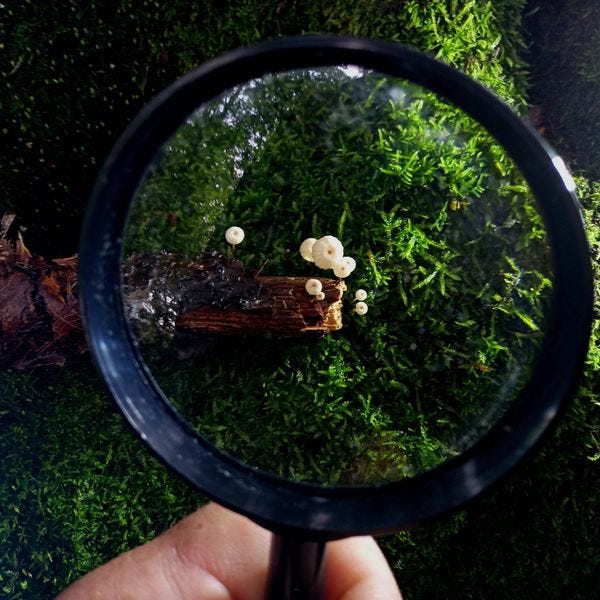
What we optimize for
There are endless reasons to value nature. However, to effectively rank the interventions in conservation, we need to simplify our approach and utilize measurable proxies. We believe that the following three properties are essential for the EcoResilience Initiative and capture the core objectives of nature conservation.
1. Tree of life - This includes functional diversity, uniqueness, and evolutionary history.
2. Ecosystems - We must recognize nature’s contributions to people, appreciate beauty, and understand the relationships between species and ecosystem resilience.
3. Longtermism - We prioritize flourishing nature, regardless of when it occurs. By considering larger timescales, we can avoid engaging in futile battles and instead identify high-leverage opportunities to safeguard certain species from temporary threats.

Longtermism
Definition: Strategic decision making on timescales extending hundreds to thousands of years.
Planning for the longterm future, which involves ensuring that interventions will lead to impacts lasting beyond hundreds of years. We will leverage our unique advantages to act early and change the course of events, enhancing ecosystem resilience. Longtermism requires us to consider the needs and desires of unborn individuals across diverse cultures while anticipating changing technological capabilities and various geographic and political shifts. We must navigate evolving valuescapes. Longterm strategy is about fostering futures that both we and future generations will find desirable.

Tree of Life Preservation
Definition: Preserving the greatest portion of the tree of life.
Description: Prioritize preventing extinction in species that are genetically distant from others to enhance ecosystem resilience. Focus on projects that will create the most significant impact for the largest number of species spread widely across the tree of life. It is essential to avoid bias towards ‘charismatic’ species like local mammals. This approach can be quantified using Evolutionary Distinctiveness through genetic uniqueness metrics, aligning with longtermism to ensure sustainable conservation efforts.
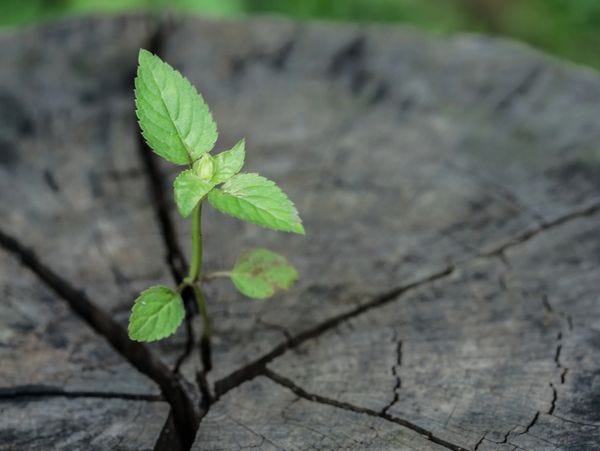
Resilience/Ecosystem Collapse Prevention
Definition: Ecosystems’ ability to self-repair and prevent the degradation of ecosystems.
Description: It is crucial to anticipate which ecosystems are at risk of collapse and intervene, especially when such collapses would be difficult, if not impossible, to reverse. While ecosystem change is a natural process, we must combat changes that lead to reduced flourishing of life, diminished ecosystem services, and instability. This endeavor requires a deeper understanding of ecosystem resilience and how to effectively implement interventions aligned with longtermism.
The Historical Roots of This Project
The beginnings of ERI came about when Tandena Wagner, Eileen Walz, and Iska Knuuttila collaborated on a forum post on ‘Resilience & Biodiversity’ over the summer of 2022 as an entry for Open Philanthropy’s Cause Prioritization Contest. Their efforts to find others working on biodiversity with an effectiveness lens led to a meeting with Alex Nunns, and - when promising leads kept looping back to their own forum post - the startling realisation that no one was working on this.
Informal weekly discussions continued throughout 2023 and fomented into a desire to start something. This idea eventually evolved into the EcoResilience Initiative, a nonprofit group investigating long-term biodiversity conservation. Since then, we have welcomed dozens of like-minded people and narrowed our organisational focus to that of an evaluator: comparing biodiversity interventions in order to identify the very best.
In 2024, we were commissioned by the Future of Life Foundation to write a review on a biodiversity grant that they were considering. Additionally, we have been actively publishing articles, hosting workshops, giving talks, and attending conferences to promote our approach.
In 2025 we published our first assessment. Our first batch of results, including our top recommendations can be found here. We started with a broad funnel of every intervention we could think of, narrowed down the most promising interventions before conducting shallow dives on each. Afterwards, we identified actors applying these interventions and estimated their effectiveness at conserving biodiversity and durability to each project. We then provided donation recommendations to altruists who share these values.
Read more about the process on our blog!
Contact Us
Reach out to us!
Other ways to connect:
Our Telegram Group
https://t.me/+TgaztdZdkA8yZmUxOur email:
EcoResilienceInitiative@gmail.comYou can support our work here: Our PayPal.me/ecoresilience Please use the “Friends and Family” payment type, since we haven’t registered yet as a charity.
