

Precision Fermentation
Alternative proteins
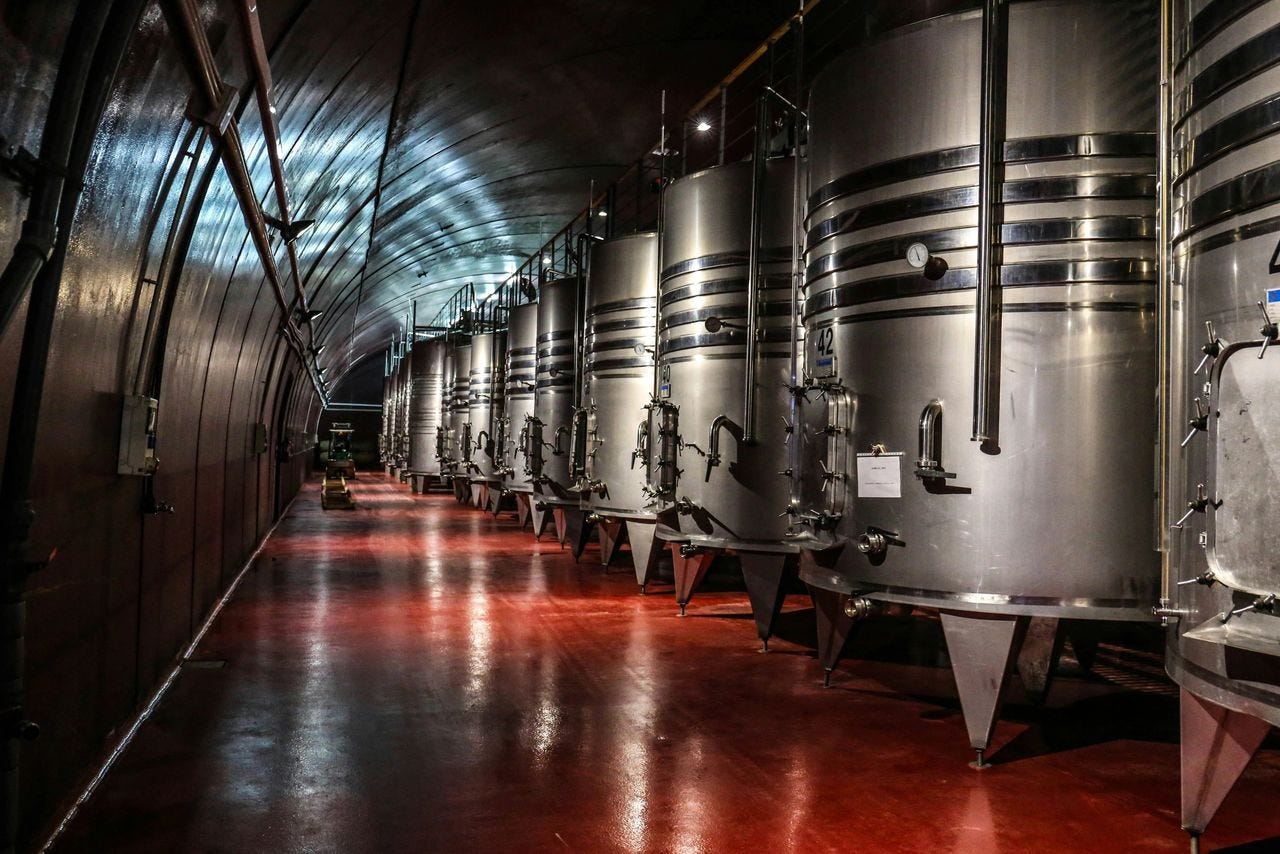
Effective Altruism has been excited about alternative proteins for a long time (in 2018 and 2023 on the 80k hours podcast). If you haven’t heard about it yet, it’s difficult to believe it’s real.1 But it is very real, and turns out to be one of the best methods of biodiversity conservation.
Instead of growing the whole cow, chicken, pig, etc, what if we just grew the protein? Precision fermentation is duplicating the molecules we like to eat. It sounds futuristic except we’ve been doing it for decades for specific ingredients like citric acid (lemon flavor), acetic acid (vinegar) and vitamins.
The process is:
use microbes to generate your molecule
nurture them so they’ll reproduce really fast
come back and harvest the molecules they mass produced for you
It’s a lot more complicated in practice, but that’s the basic idea. Much like fermenting to make beer, getting the ratios just right is very difficult.
Precision fermentation is exciting because it’s potentially much more efficient than raising cattle2 or growing crops. You are growing just the molecules you want to eat, instead of the whole organism. It’s great for animal rights. It’s great for land use (79-86% less area than beef). It can’t spread infectious diseases to wild animals or livestock. According to a comparative model in 2023, it is also the most nutritional source of protein with the lowest overall environmental impacts (such as water eutrophication, carbon emissions,3 nitrogen/soil acidification, and more).
This is a big deal because per capita meat consumption is increasing, especially in developing countries. It has doubled before and it could double again - from 25kg in developing countries (mostly in tropical megadiverse countries) to 100kg per year as the levels are in industrialized countries. Meat is far less efficient and takes far more resources and land area to produce, compounding the impacts. Producing cattle meat takes about 24 input calories per output calorie. Precision fermentation uses 3-5 input calories per output calorie. That is 5x less already, and this is expected to improve.
Unlike the “improving crops” intervention, this intervention would unambiguously reduce total agricultural land. If it were cost competitive, it would drive down land use demand. If precision fermentation expands to take up 20% of the market, we would see a 50% drop in future deforestation (78Mha particularly in sub-Saharan Africa) even with increased population, according to this well-constructed scenario. Cropland would still expand because of increasing meat demand and sugar requirements for fermentation. At 80% adoption, almost no natural land is converted (0.6 Mha/year), especially in the Congo, Amazon, and Central America.
It is not cost competitive yet, mostly because of startup costs in infrastructure, but some projections say it will be cheaper than chicken in 2040. Prices are already looking like they will drop from $4-5 per kilogram to $2.5 per kilogram in the imminent future. It’s a new emerging technology that might revolutionize agriculture and sustenance. (4 billion dollar industry and is projected to 10x in 5 years). It’s not just about meat substitutes either. Adding protein to flours could improve diets while decreasing the need for land.
Precision fermentation is fed by sugars. These sugars are mostly from corn, sugar beet, sugarcane, and wheat. Anything that is high in sugar, grown locally, and already mass produced. This would imply that as the world shifted to precision fermentation proteins over livestock proteins, agriculture would shift from livestock feed crops (like soy, barley, sorghum) to surgery crops (like sugar beet and sugarcane). Other crops work for both (like corn, wheat, and cassava). That means places that can only grow starchy livestock crops and not sugary fermentation crops, like parts of Brazil, Canada, Australia, would potentially deconvert from agriculture to wild lands. Other areas that previously could not grow starchy crops, might convert land from natural areas to sugar crops. Like in Ukraine and Russia for sugarbeet, and increased pressure in India, Brazil, Thailand, and China for sugarcane and cassava. This is not a desirable transition to high sugar crops, as they tend to grow best in tropics. Sugar beet and wheat have better prospects for land conversion.
However, looking at the scenarios in this analysis replacing beef with microbial protein: even using sugar cane, even in biodiverse countries, this is still a win! The authors project more cropland in Latin America and India (negative for biodiversity). However, this is more than traded for by 1) gaining forest in Latin America and India, 2) losing (massively) less forest in Sub-Saharan Africa and (some) southeast Asia, 3) deconverting large amounts of pasture in Sub-Saharn Africa, Latin America and China, and 4) less crop gained in China. This is an overall win for the biodiverse countries as well across all scenarios 20% to 80% microbial protein replacing beef, even using sugar cane feedstock.
And a way to circumvent this problem is underway. The precision fermentation industry is looking into using ag-waste products or wood pulp as feedstock as well. This is a very real possibility. The drawback is that processing these feedstocks is very energy intensive (explosive steam) to convert it to usable feedstock. Local energy production makeup then becomes an important factor for land use and carbon emissions. The first factories are being built now, so in a few more years (2030) we should see increasing build out. It may be possible in the upcoming future to reach places like South Africa, use yam waste, and create protein rich cassava replacement at cost.
Giving Green recommends it as an environmental intervention. Effektiv Spenden wrote a great article about it here. And for the first time Ambitious Impact recommended it out of their research program. Their summary is: scale-up-funding is very neglected and precision fermentation is great for both the environment and for animals. I generally see the Good Food Institute being recommended.
One of the remaining obstacles is the visibility, perception, and availability of these products. Future use is determined by price, but it is also determined by how well these products integrate and how pervasively they are used. So it might make a big difference to be an early adopter. Using them in recipes, increasing their visibility, and thereby increasing their availability and future use by others. Specifically, it is important that these proteins are not seen as an impractical novelty food, but as a normal ingredient. Other ways to increase their expansion would be to directly donate or invest in precision fermentation companies.
There’s a whole variety of techniques, but I’m going to be discussing microbial proteins because they are generally more efficient.
Tropical megadiverse countries are expected to expand their total agricultural area by 30% on average to accommodate growing demand for meat. We already see this in Ecuador, Brazil, and the Philippines. Land area converted to agriculture is expected to increase by one billion ha of natural habitats between 2000 and 2050. Beef and feedstock is driving deforestation in Brazil of the Amazon rainforest. Starting from zero in 1996, over 4 million hectares of Brazil is soybean exports to feed cattle. “roughly 7.0 gigatons (Gt) of plant biomass is required to produce the 0.26 Gt of meat in our modern global agricultural systems (Smith et al., 2013), even a small increase in the consumption of animal-based foods will drive a large increase in habitat conversion”
Currently, comparing protein to protein between cellular agriculture/microbially produced and traditional dairy milk extracted protein: the carbon footprint is currently similar. It differs based on location due to energy use and required sugar input. Both of these can be improved, bringing the microbial method to be 50-20% more carbon efficient. This can presumably be further improved with technological progress on microbial production and harvesting efficiency.